


Dear Friends,
I am on my annual escape from January cold…hiding out for a couple weeks in San Pedro, Belize. You are in my prayers each and every day while I am away. This weekend and next, I will give you what Pope Leo said in a homily to mark the end of the Jubilee Year:
The gospel described for us the great joy the Magi experienced when they saw the star once again, and at the same time how Herod and all in Jerusalem were troubled by their searching. Indeed, every time sacred scripture speaks of God manifesting himself, it does not hide the contrasting reactions, such as joy and agitation, resistance and obedience, fear and longing. Today we celebrate the Epiphany of the Lord, aware that in his presence nothing stays the same. This marks the beginning of hope, for God reveals himself and nothing remains unchanged. His presence puts an end to that type of melancholic complacency which causes people endlessly to say, “There is nothing new under the sun.” Something new begins which determines the present and the future, as the prophet announced: “Arise, shine; for your light has come, and the glory of the Lord has risen upon you.”
It is surprising that Jerusalem, a city which has witnessed many new beginnings, is troubled. Within the city, those who study the scriptures and think they have all the answers seem to have lost the ability to ask questions and cultivate a sense of longing. Indeed, the city is frightened of those who, moved by hope, come to it from afar; the city seems fearfully threatened by what should instead bring great joy. This reaction also challenges us as a church.
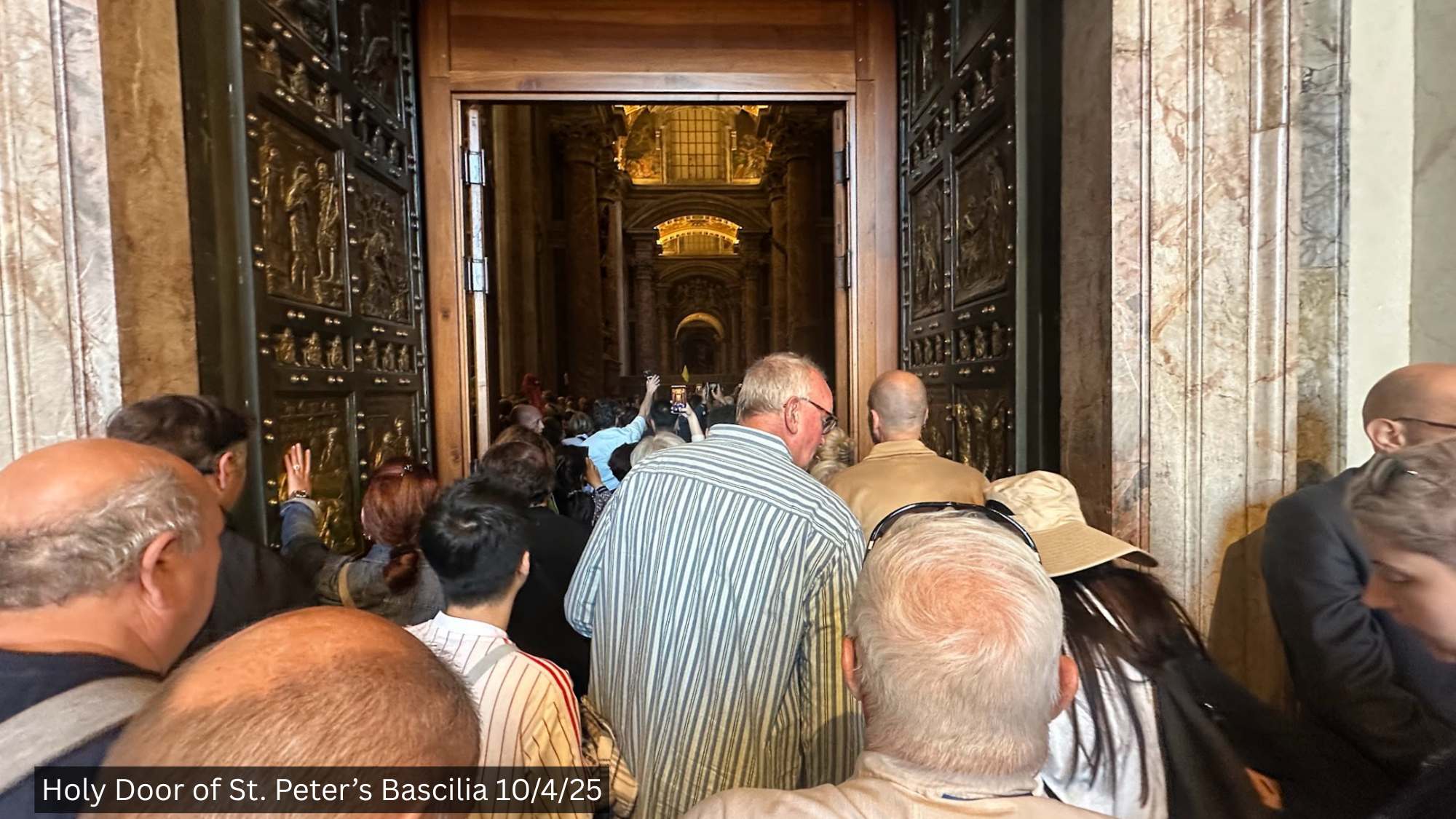
The Holy Door of this basilica, which today is the last to be closed, has seen a stream of innumerable men and women (some of them from Cabrini!), pilgrims of hope, journeying toward the new Jerusalem, the city whose doors are always open. Who were these men and women, and what motivated them? At the end of this Jubilee year, the spiritual searching of our contemporaries, much richer than perhaps we can comprehend, invites us to earnest reflection. Millions of them crossed the threshold of the church. What did they find? What was in their hearts, their questions, their feelings? Yes, the Magi still exist today. They are the people who sense the need to go out and search, accepting the risks associated with their journey, especially in a troubled world like ours that may be unpleasant and dangerous in many ways.
The ancients referred to homo viator, and indeed all of our lives are a journey. The Gospel challenges the Church not to be afraid of this phenomenon, but to appreciate it, and orient it toward God who sustains us. He is a God who can unsettle us because he does not remain firmly in our hands like the idols of silver and gold; instead, he is alive and life-giving, like the Baby whom Mary cradled in her arms and whom the wise men adored. Holy places like cathedrals, basilicas and shrines, which have become Jubilee pilgrimage destinations, must diffuse the aroma of life, the unforgettable realization that another world has begun.
Let us ask ourselves: is there life in our church? Is there space for something new to be born? Do we love and proclaim a God who sets us on a journey?
Pause with that question in your mind for the next week. Pope Leo wants to know is their life at Cabrini? Is there space here at Cabrini for something new to be born? Do we love and proclaim a God who sets us out on a journey? How is that happening in your life?
More next week…
Peace,
Fr. Damian