
Dear Friends,
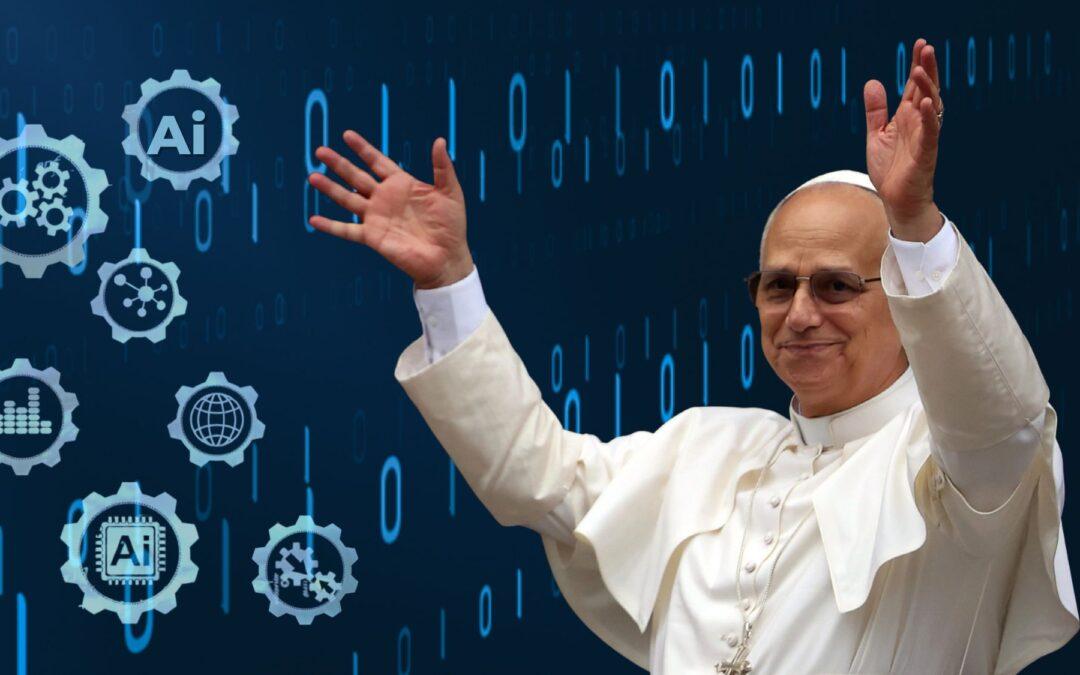
In this, our moment in history, as humanity faces something totally new, Pope Leo has given us a teaching to guide us with a wisdom born of the Holy Spirit. The Holy Father signed Magnifica Humanitas on May 15, 2026, the 135th anniversary of Rerum Novarum. The Holy See released the text on May 25th, the Memorial of the Blessed Virgin Mary, Mother of the Church, the day after Pentecost Sunday. As Leo XIII gave the Church her foundational social encyclical for the industrial age, Leo XIV now offers the Church the foundational social encyclical for the digital age. The letter has provoked a wide response from people all over the world.
The document is substantial, two hundred and forty-five paragraphs across five chapters with 42,000 words, but it is luminous. It is magisterial teaching at its best, giving us principles, criteria, and language with which to discern, judge, and act in the historical moment we have been given.
The Holy Father frames the entire encyclical around a single biblical contrast announced in the very first paragraph:
Humanity, created by God in all its grandeur, is today facing a pivotal choice: either to construct a new Tower of Babel or to build the city in which God and humanity dwell together. Each generation inherits the task of shaping its own era, of guiding history to become a place where the dignity of every person is safeguarded, justice is promoted and fraternity is made possible. Yet every era also runs the risk of creating an inhumane and more unjust world. Whenever humanity is in danger of marring its true identity, we Christians lift our eyes to the Incarnate God, knowing that it is “only in the mystery of the Word made flesh that the mystery of humanity truly becomes clear.” In Jesus Christ, this humanity in its grandeur becomes the Way, the Truth and the Life, opening the path for each of us to grow toward fullness.
The image is not fluff or overly spiritual. It is the interpretive key to the remainder of the encyclical. The Tower of Babel is the technological project conceived without reference to God — a project of self-affirmation marked by a single language, a single direction, a single grandiose ambition that sacrifices human persons to efficiency and ends. Despite its towering aspiration, it ends in dispersion and chaos. Against Babel, Pope Leo places the rebuilding of Jerusalem by Nehemiah after the Babylonian exile. Nehemiah does not impose solutions from above. He fasts, prays, and intercedes before he acts. He calls together families and assigns each one a section of the wall. He rebuilds relationships before he rebuilds with stones. The city is reborn through the shared responsibility of all: men, women, priests, artisans, heads of households, the young and the old. We are being invited to choose either the tower of dominance or the wall of communion. The Holy Father is telling us that this is the choice before us in the age of artificial intelligence — and each of us has been assigned a section of the wall.
I hope you take the opportunity this summer to read the letter. For a document from the Vatican, it is quite readable even though it is a bit long. I will be offering you reflections this summer in this space based on the encyclical. So, even if you do not read the whole thing, you will get the essential parts.
Peace,
Fr. Damian