


Dear Friends,
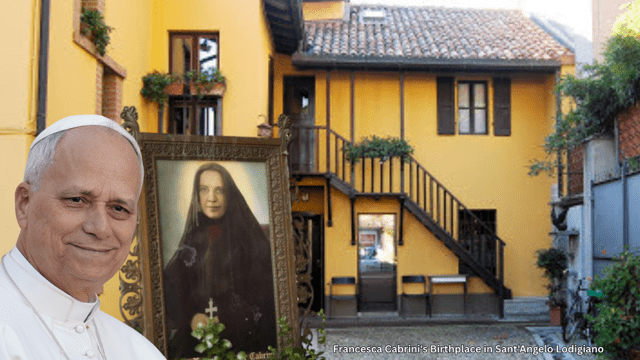
I will continue with an overview of Pope Leo’s encyclical on AI in a moment, but first I want to reflect briefly upon what Pope Leo did Saturday. According to his schedule on the Vatican website, while visiting Northern Italy, he is to go by car to the parish of Santi Antonio Abate e Francesca Cabrini, where he will participate in the adoration of the Blessed Sacrament and the veneration of the heart of St. Frances Cabrini.
Isn’t that cool? St. Frances Cabrini died in Chicago in 1917, and Pope Leo probably visited her shrine in Chicago while growing up there. But even more important than their Chicago connection is a shared global solidarity, developed by their own life experience across borders, cultures and continents, that inspired a shared commitment to the people building new lives in distant lands. While pausing to venerate her heart, he will most likely be offering a prayer for all immigrants who are suffering throughout the world and who have become the scapegoats for the problems politicians do not want to deal with. Perhaps you and I could offer to God a similar prayer today.
Okay, back to the encyclical. If I were still teaching religion in one of our local Catholic High Schools, I would be elated to have the first two chapters of Magnifica Humanitas. Chapter One is a brief history of Catholic Social Teaching and Chapter Two is a summary of the main points of that teaching. I would gladly assign those two chapters to all my students. They are the best summary of Catholic Social Teaching that I have come across in my career.
Pope Leo goes over the whole teaching beginning with the encyclical of Leo XIII, Rerum Novarum (the title, translated to English, is “New Thing”), published in 1891. There, Leo XIII said, “The proclamation of the Gospel cannot overlook the concrete lives of people.” His “new thing” in 1891 included the dehumanization of workers in factories and other workplaces. Rerum Novarum “reminds us that there is no authentic evangelization that does not also affect the structures of human society.”
In his summary of 135 years of church teaching, Leo XIV clarifies what the social doctrine of the Church is: the fruit of a long ecclesiastical reflection on social and political life, nourished by Scripture, tradition and theological, philosophical and juridical tradition. It wants to make the humanizing power of the Gospel fruitful for decisions “that promote the dignity of every human being, the cohesion of communities and the well-being of all”. In Jesus Christ, Pope Leo recognizes the “most concrete form” of this social doctrine.
More next week…
Peace,
Fr. Damian