


Dear Friends,
Welcome to Advent. In our discussions at the Liturgy Committee planning session for Advent, we were led to the idea that our theme this year would focus on following Mary’s example of preparing for Jesus’ birth. We are in the final weeks of the Jubilee Year which ends on Epiphany. The theme of the Jubilee, as you know, has been Pilgrims of Hope. And, no one is a better model of hope than Mary. One of the first things we see in Mary is her contemplative approach to prayer. Her heart was open to listening to what God wanted from her.
A posture of quiet listening in prayer is difficult for us in our busy world. It takes time, and we are rushed; our minds and our lives are filled with noise and activity. To simply sit and listen may make us feel like we are wasting our time when there is so much to do and know. How can we learn to slow down and then use our observations to ask and answer questions which lead us deeper into our own heart where our God dwells?
While a senior in college, my spiritual director gave me a couple books written by Annie Dillard. I hope you have had a chance to encounter her writing over the years. Her prose is so beautiful and comes from a posture, like Mary’s, of quiet listening and observation. At the beginning of her book, Pilgrim at Tinker Creek, she writes, I live by a creek, Tinker Creek, in a valley in Virginia’s Blue Ridge….I think of this house clamped to the side of Tinker Creek as an anchor-hold. It holds me to the rock bottom of the creek itself….Theirs [the creek’s] is the mystery of the continuous creation and all that providence implies: the uncertainty of vision, the horror of the fixed, the dissolution of the present, the intricacy of beauty.
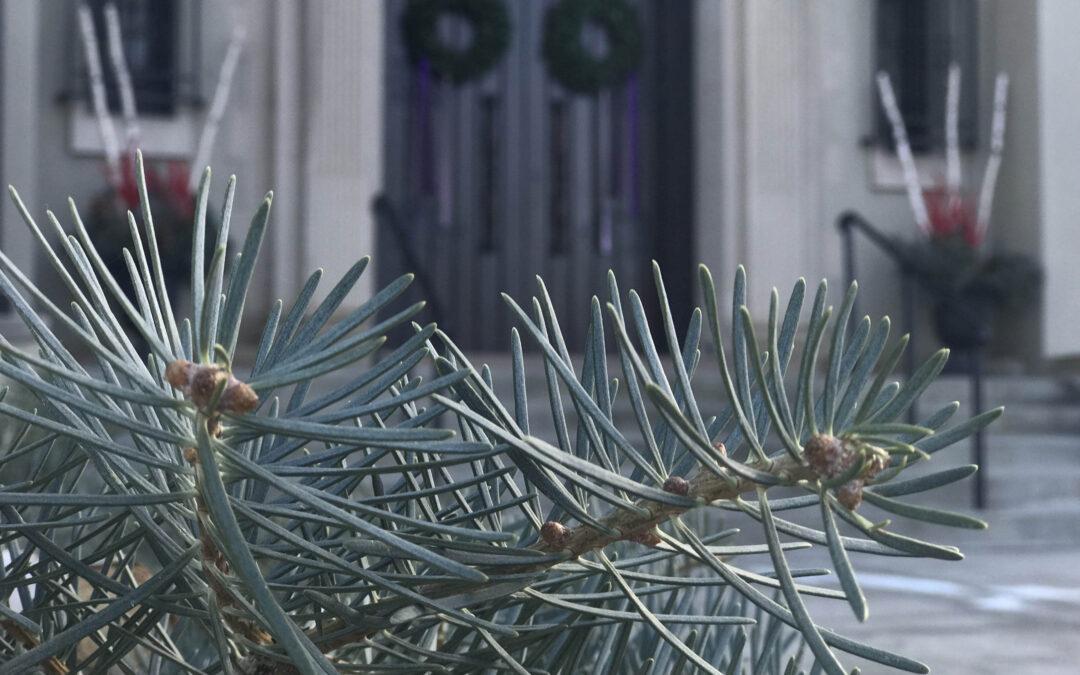
Much of her writing offers readers an opportunity to shift their gaze away from themselves and toward the things surrounding them. This is the contemplative stance as Carmelite Fr. William McNamara defined it, a long, loving look at the real. To contemplate is to still our hearts so that we can focus on what God has given us and on God, the giver of all gifts. When we do so, we forget about our own aches and pains because we have given ourselves over to beauty and to love.
In her writing, Dillard did not simply focus on nature generally, but her prose is loaded with incredibly particular observations. She does not merely state that the sun rises and it’s beautiful, Dillard emphasizes the small and seemingly easy things to miss. To Dillard, this is where the magic of nature happens – the world. Dillard teaches that only by having a slow and focused gaze on the world around us are we able to see and learn new things.
In her book, Holy the Firm, she writes, We sleep to time’s hurdy-gurdy; we wake, if ever we wake, to the silence of God. And then, when we wake to the deep shores of time uncreated, then when the dazzling dark breaks over the far slopes of time, then it’s time to toss things, like our
reason, and our will; then it’s time to break our necks for home. There are no events but thoughts and the heart’s hard turning, the heart’s slow learning where to love and whom.
Mary was ready to encounter an angel because she had a contemplative heart. She was able to sense his presence and hear the angelic message and say “let it be done to me” because it was not the first time the quiet powerful love of God was made real to her.
Perhaps it was easier in the quiet little town of Nazareth to spend time alone with God. We may not think it is a fair comparison. How can we truly be like Mary? I’d like to suggest that you can begin to be like her by truly choosing to take time out of your day to quiet the noise, focus on some small thing, and in the silence to listen to what God may be saying to you. For the sake of our world, take a long, loving look at the real.
Peace,
Fr. Damian