

Dear Friends,
Most of you are probably very aware that the young woman who suffered from mental illness and who broke into the rectory two years ago was killed by Omaha police as she attacked a three-year-old with a knife. In my comments to the press in the days that followed, I tried to emphasize our need for better care for those who suffer from mental illness. There must be better options than putting a dangerous person who suffers from mental illness back on the street or putting them in jail.
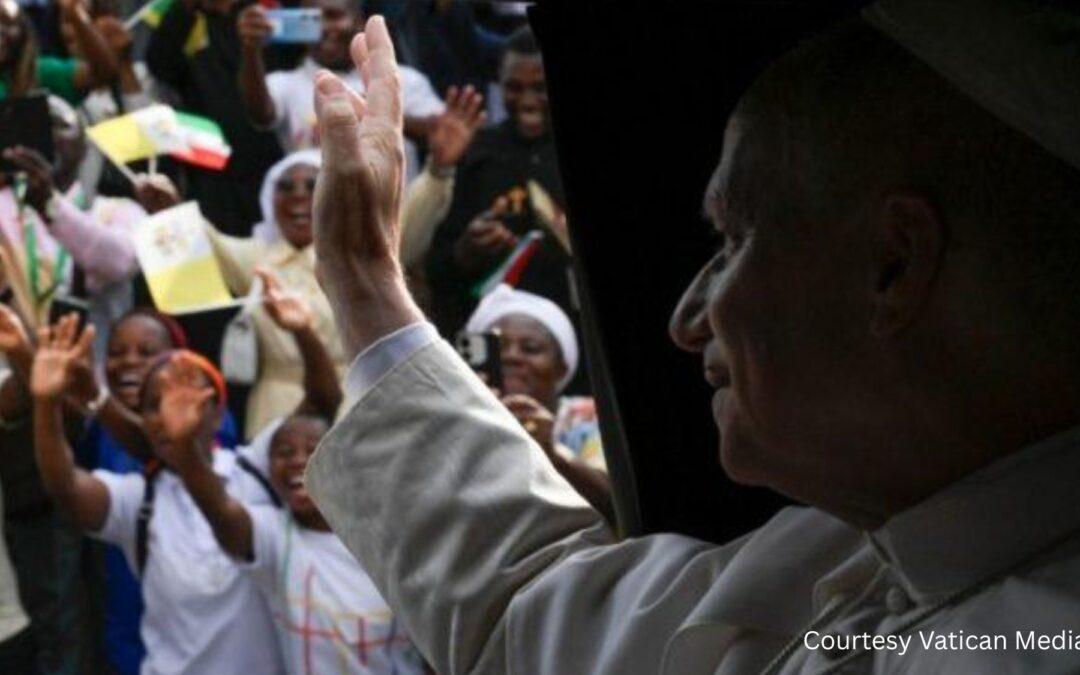
As I write this letter, Pope Leo is on a ten-day trip to Africa. Yesterday, he visited the Jean Pierre Olie Psychiatric Hospital in Equatorial Guinea. After arriving, the Pope heard various testimonies, including one from a former patient, Tarcisio Cervera, who has been reintegrated into society and who wrote a poem for Pope Leo, who he said represents God and “drives away all evil and gives strength to the soul.” I thought you might enjoy reading some of what Pope Leo said at that hospital:
Whenever I visit a hospital, a home or a residence for people who may have various illnesses or challenges, I have mixed feelings: on the one hand, I feel the pain or sadness of those people who are suffering; many times they are in a great deal of pain. Sometimes their wounds are visible, and sometimes they have wounds that no one sees, but that they know they carry in their heart and in their life. I feel sorrow for the families who often do not know how to accompany and help the patient.
However, I admire and am comforted by all that is done there each day to serve human life. I feel the same way here; but today, I find — and I hope the same is true for you — that joy and hope prevail. It is the joy of meeting in the name of the Lord, the joy and hope of knowing that we are caring for those who are in poor health. I was moved by some of the words that I have heard just now.
The Hospital Director said: “A truly great society is not one that hides its weaknesses, but one that surrounds them with love.” Yes, that is true. This is a principle of a civilization with Christian roots, for in the course of human history Christ came to redeem and restore to full dignity those who suffer from the stigma of disability. However, the Savior does not wish to, nor can he, save us without our cooperation, both on a personal and a social level. Therefore, he asks us to love our brothers and sisters not just in words, but also in deeds. A facility such as this, with God’s help and everyone’s commitment, can become a sign of the civilization of love.
Mr. Pedro Celestino chose to conclude with a touching remark: “Thank you for loving us just as we are.” I say, thank you for your witness! Thank you to all of you for being here bearing witness, which is a sign that here, in this place, there is genuine love.
God loves us just as we are. In reality, only God completely loves us as we are, but he does not intend for us to stay that way! No, God does not want us to always be sick and in pain; he wants us to be healthy! God wants to heal us. God wants to grant us this grace to help us heal the wounds that we carry.
This is seen in the Gospel time and again. Jesus came to love us just as we are, yet he does not want us to stay that way, but rather to care for us! A hospital, especially one with a Christian mission, is a place where a person is welcomed just as they are and respected in their frailty, so that they can be helped to get better according to a holistic vision…Finally, thank you to Mr. Tarcisio for his poem! I would like to say that in an environment such as this, many hidden “poems” are composed every day, perhaps not with words, but with small gestures, with thoughtfulness and kindness in your relationships with one another. It is a poem that only God can fully read and which consoles the merciful Heart of Christ.
Peace,
Fr. Damian