
Dear Friends,
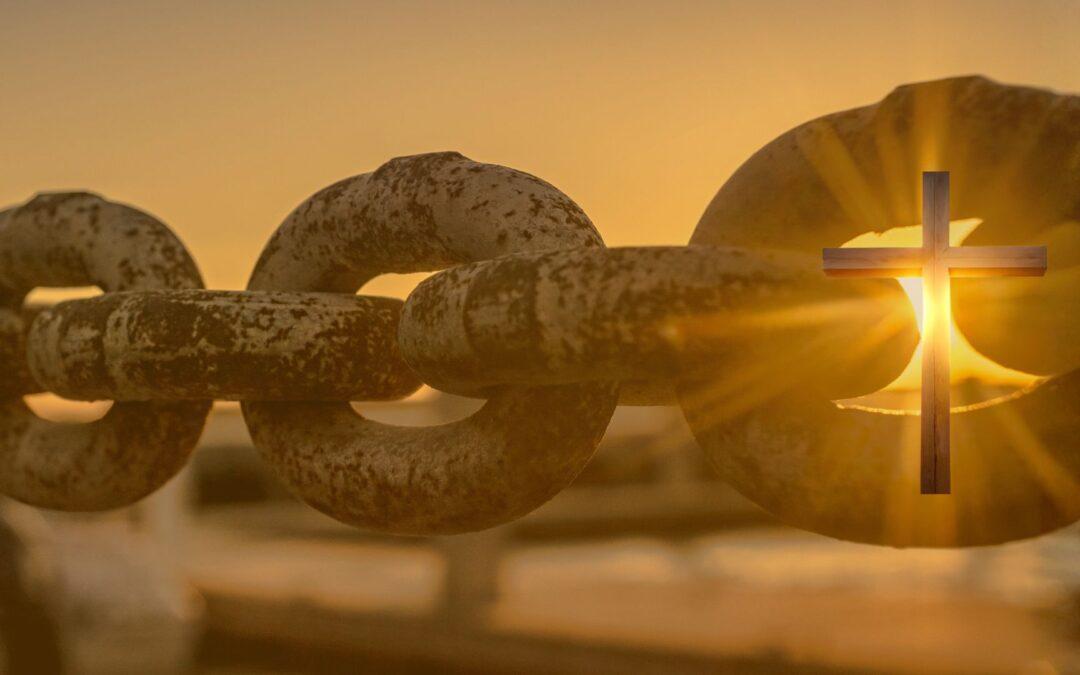
In the last part of Chapter Four, Pope Leo discusses the possible new forms of slavery brought about by AI. When he does so, he acknowledges the sad role the church played in the history of human slavery and seeks pardon for it:
Yet neither can we deny or diminish the delay with which both society and the Church came to denounce the scourge of slavery. In antiquity and the Middle Ages many individuals and even ecclesiastical institutions had slaves. Already in the early modern period, the Apostolic See of Rome, responding to requests from Sovereigns, intervened several times in order to regulate and legitimize forms of subjugation, and, in certain cases, the enslavement of “infidels.” It was only in the nineteenth century that a formal, absolute and universal condemnation of slavery was clearly articulated, notably under Pope Leo XIII. This development offers a clear example of the Church’s growth in understanding the perennial truths of Revelation that she safeguards. Although there was not always consistency in practice — given that slavery was long tolerated before being unequivocally condemned — there has been a continuous affirmation throughout history of the dignity of every human being, created in the image of God, even if it took eighteen centuries for its full incompatibility with slavery to be explicitly recognized. This constitutes a wound in Christian memory, one from which we cannot consider ourselves detached. It is impossible not to feel deep sorrow when contemplating the immense suffering and humiliation endured by so many in stark contrast to their immeasurable dignity as persons infinitely loved by the Lord. For this, in the name of the Church, I sincerely ask for pardon.
This is why the memory of past complicity and blindness in the face of the injustice of slavery becomes a call to vigilance. What we have learned must be translated into discernment and responsibility in the present. If we want to avoid the need to ask for pardon again in the future for having failed to respect the treasure of human dignity that is required by our faith, it falls to us today to denounce, clearly and firmly, trafficking in its many forms and, together with all who are committed to this cause, to support concrete efforts of prevention, protection, liberation and rehabilitation.
Even today, colonialism assumes new forms. It no longer dominates only bodies, but appropriates data, transforming personal lives into exploitable information. Entire regions, especially those marked by structural fragility and limited geopolitical relevance, are currently subjected to a new mindset of extraction: that of health data, epidemiological profiles, genetic maps and demographic information. These have become the new “rare earths” of power: vital data which, once aggregated and analyzed, can be used to train predictive models, guide investment strategies, anticipate crises and, above all, determine who and what is deemed to matter. Those who control the health data of entire peoples — often collected under the pretext of aid, research or innovation — possess a structural leverage over the future, for they can shape needs and markets. They can also decide, before others, to whom medicines, investments and protections will be allocated. Here lies one of the most urgent moral challenges of our time: to ensure that shared knowledge becomes a true common good rather than an instrument of dominance. This requires restoring to individuals not only the data that describes them, but also the ability to decide how it is used, by whom and for whose benefit. Otherwise, the digital age will not be post-colonial, but colonial in another form.
Next week we start the final Chapter.
Peace,
Fr. Damian